Riyadh Plants
Taily Weed, kardhi, alandra
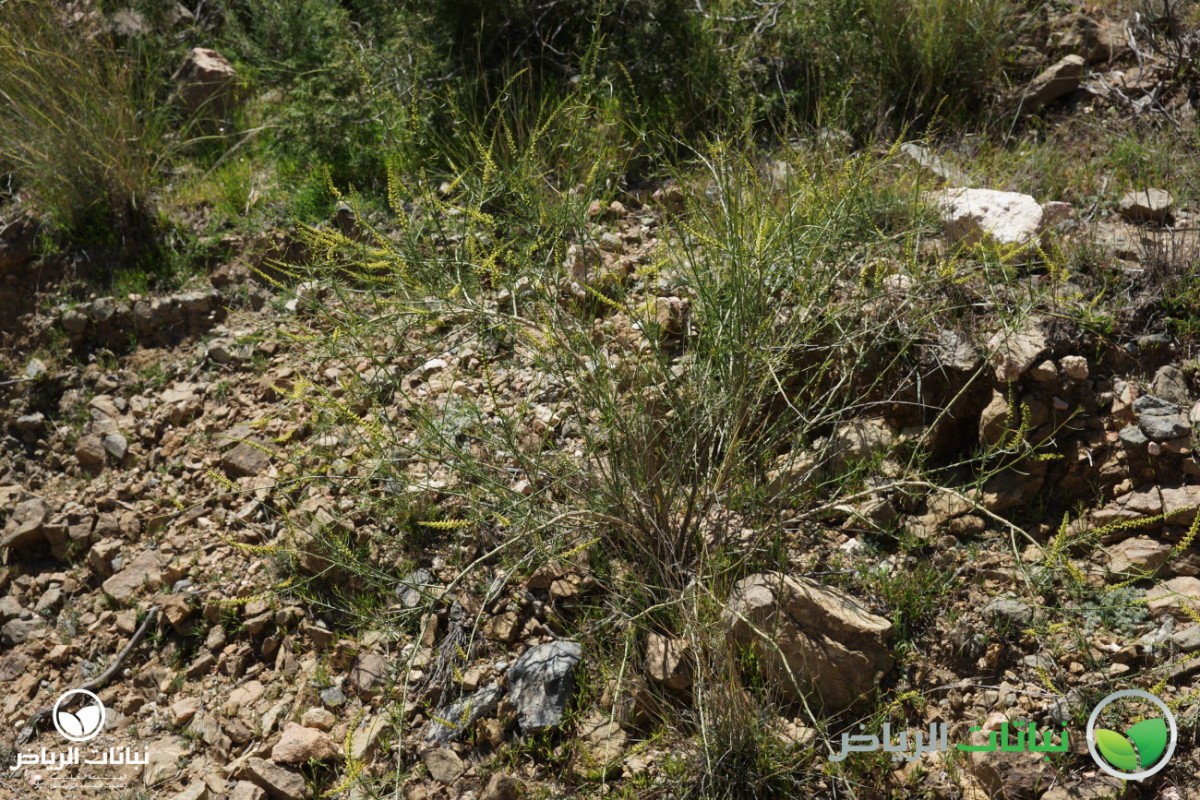
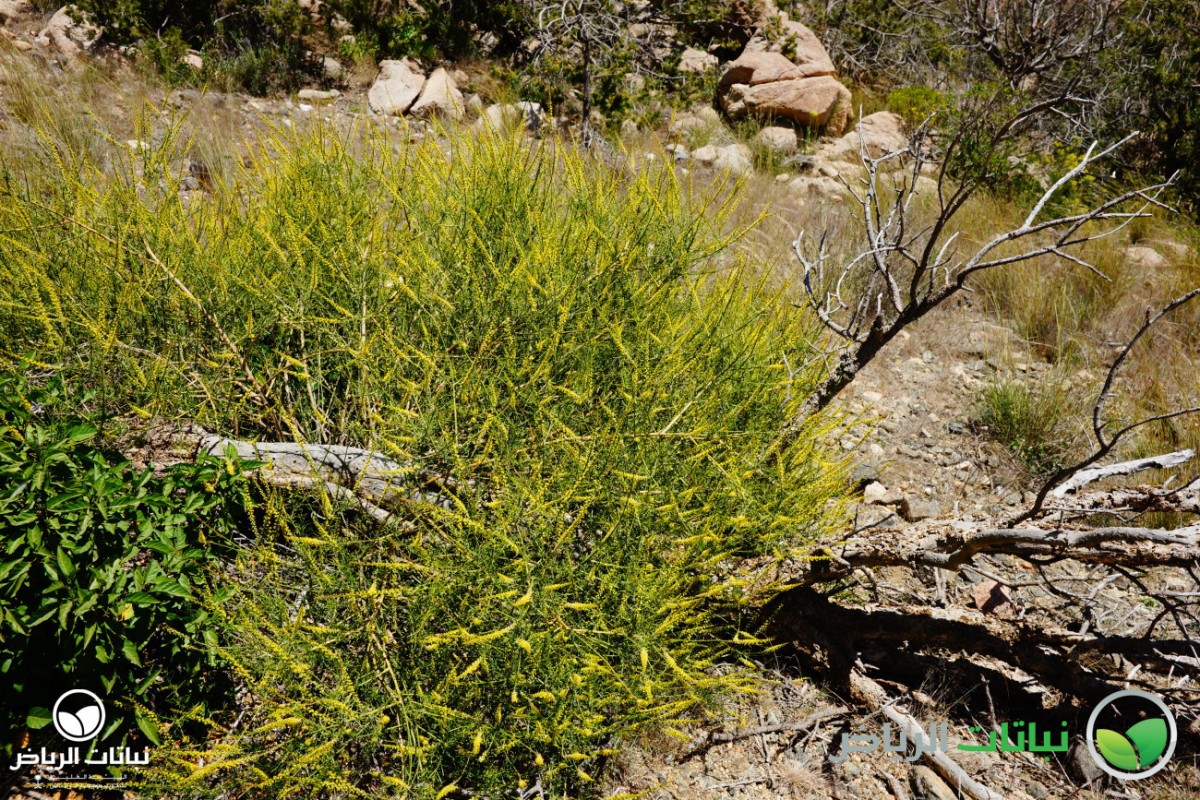
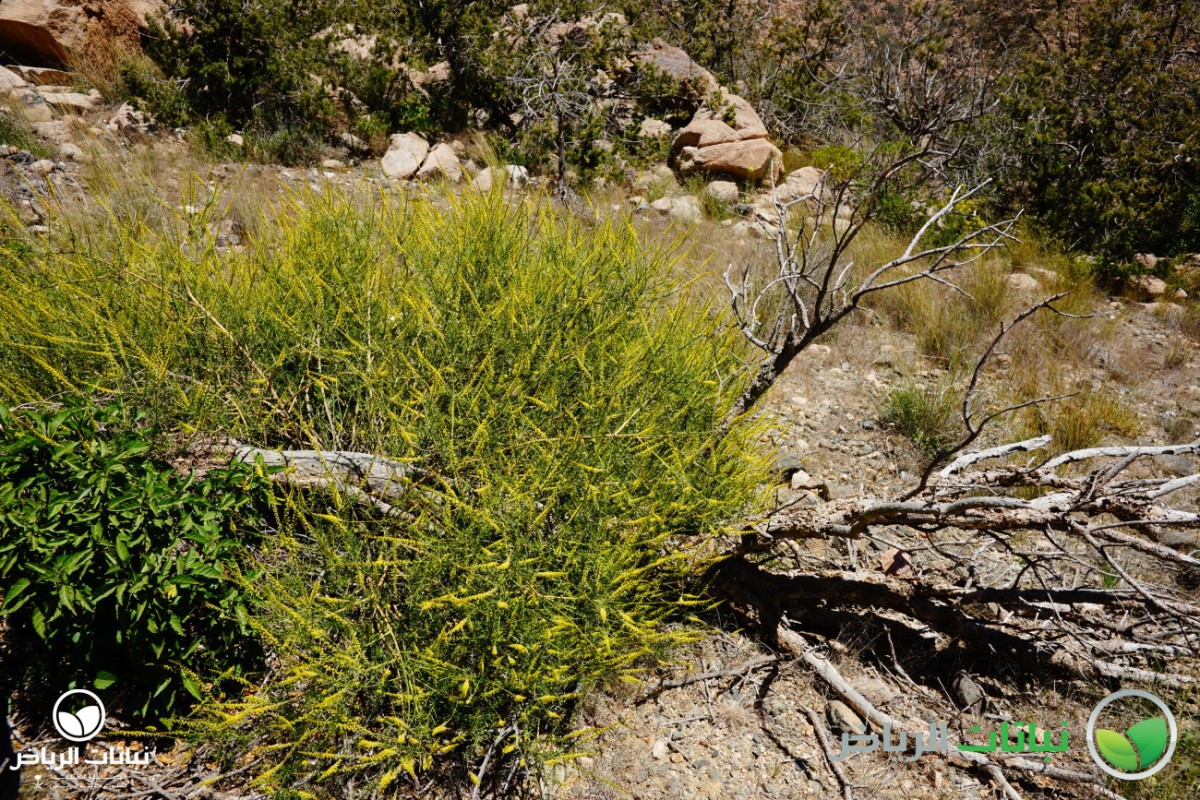
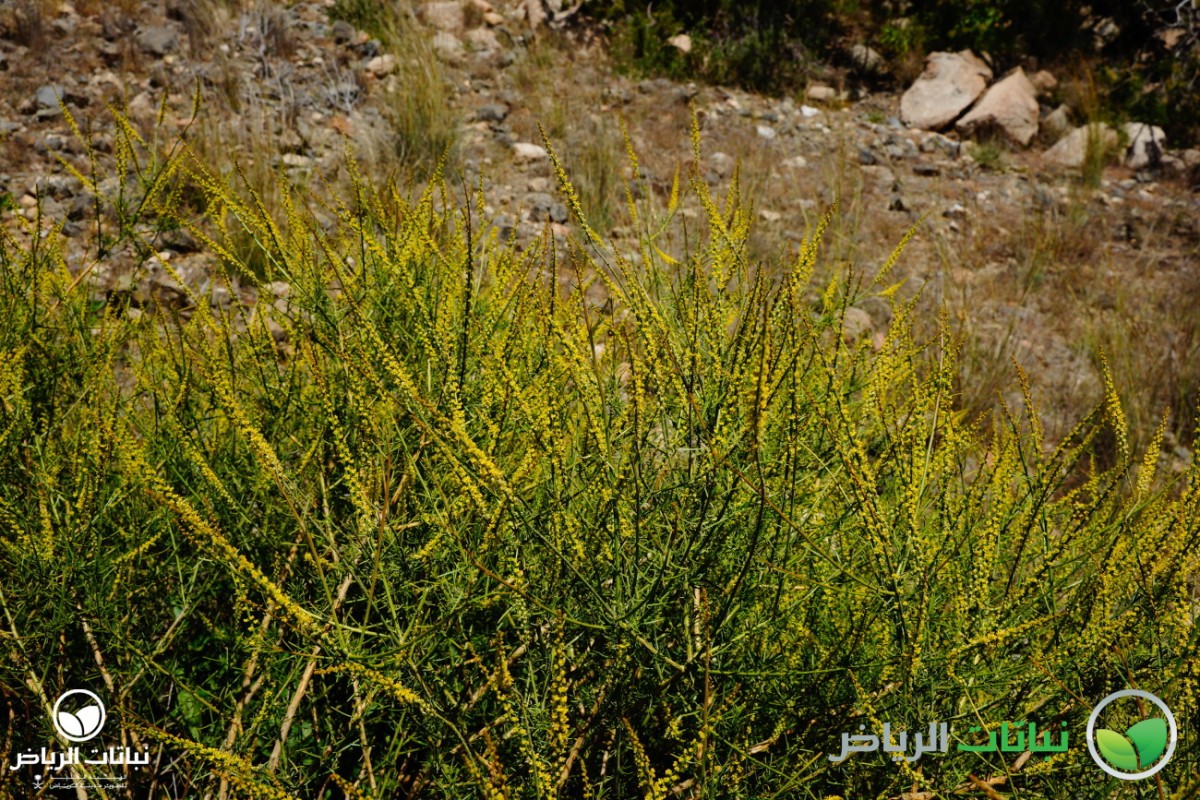
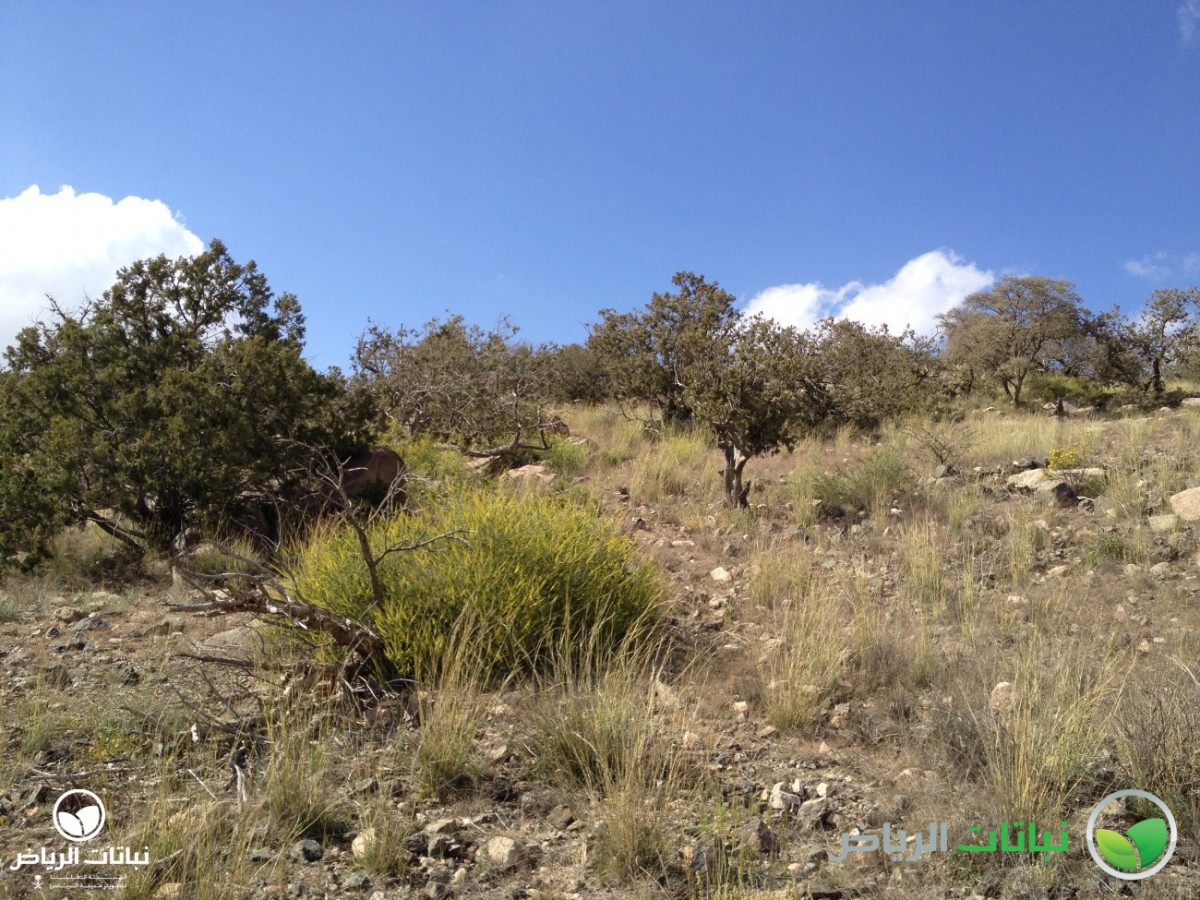
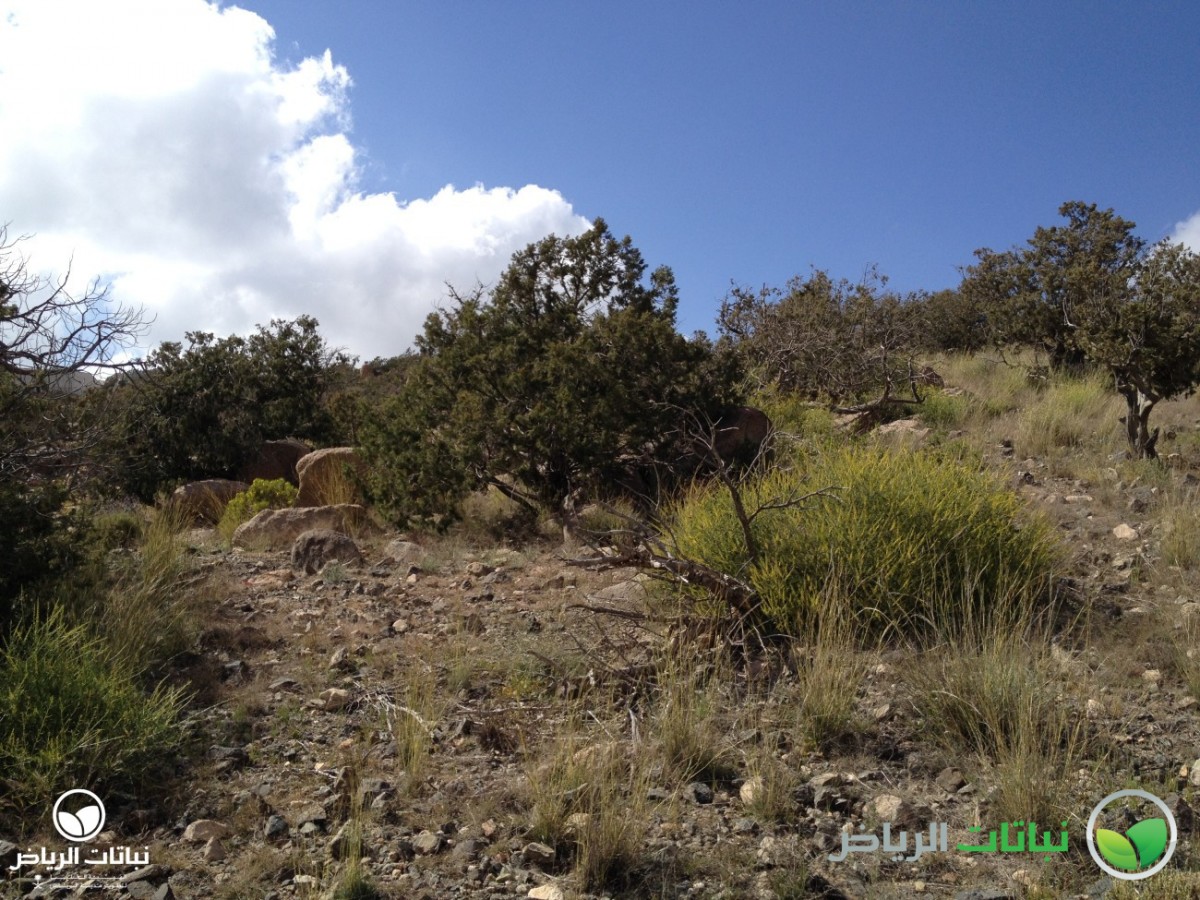
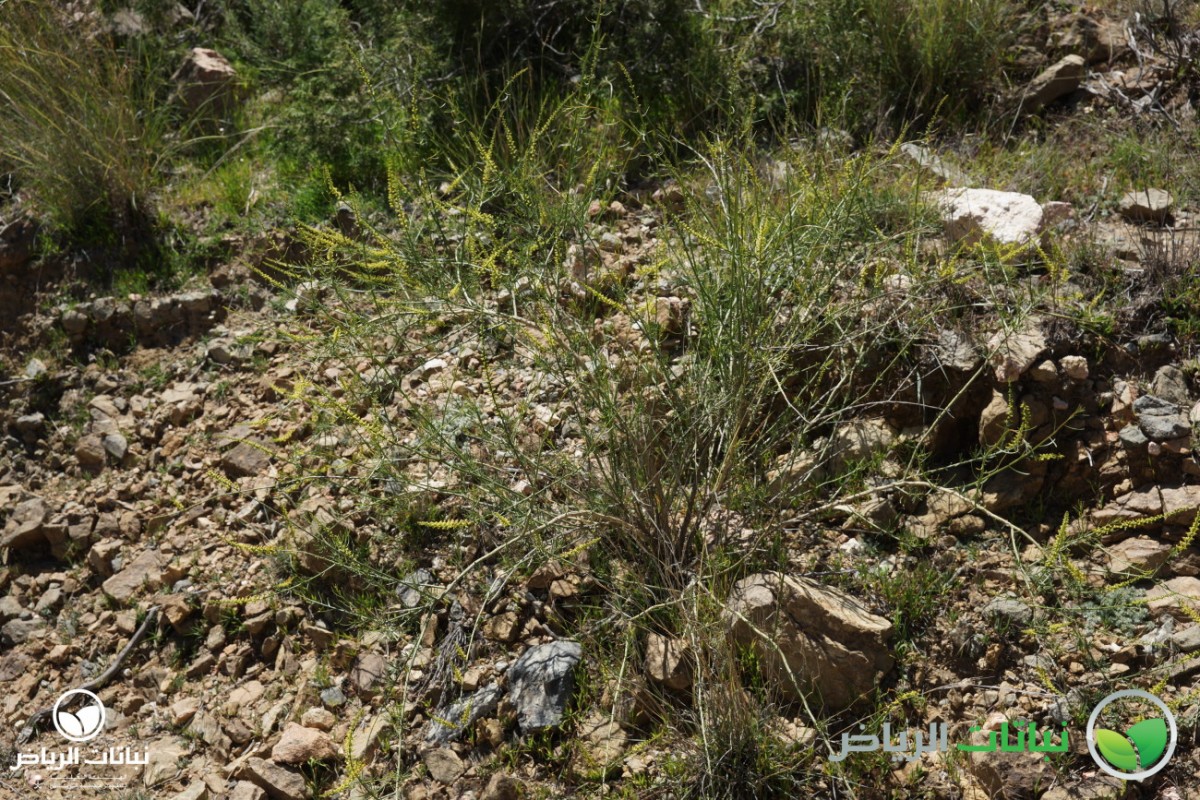
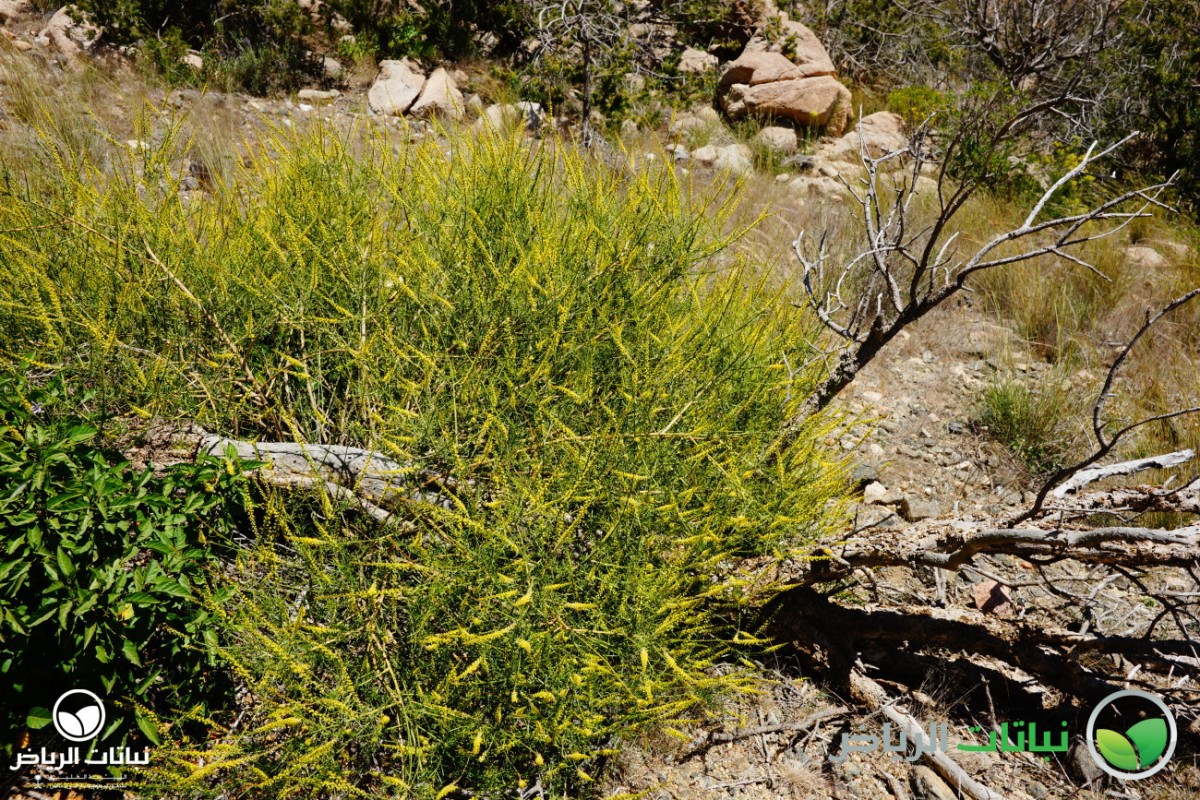
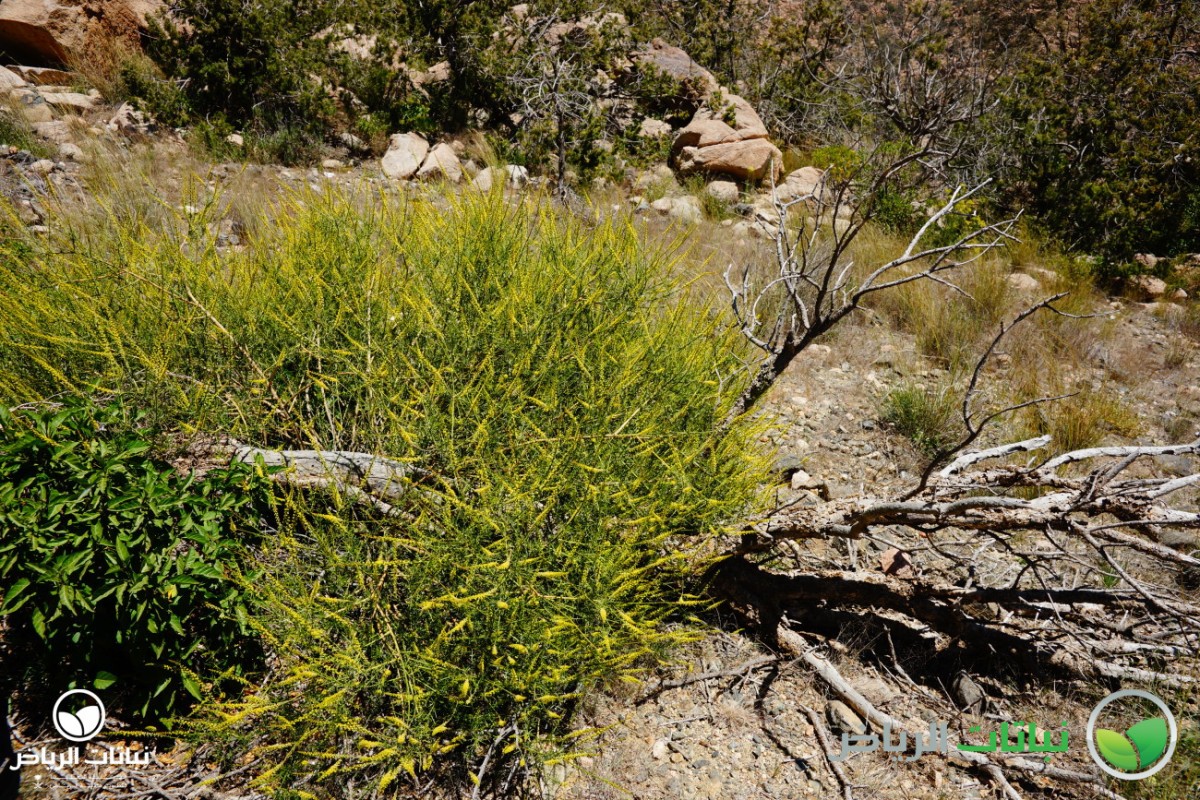
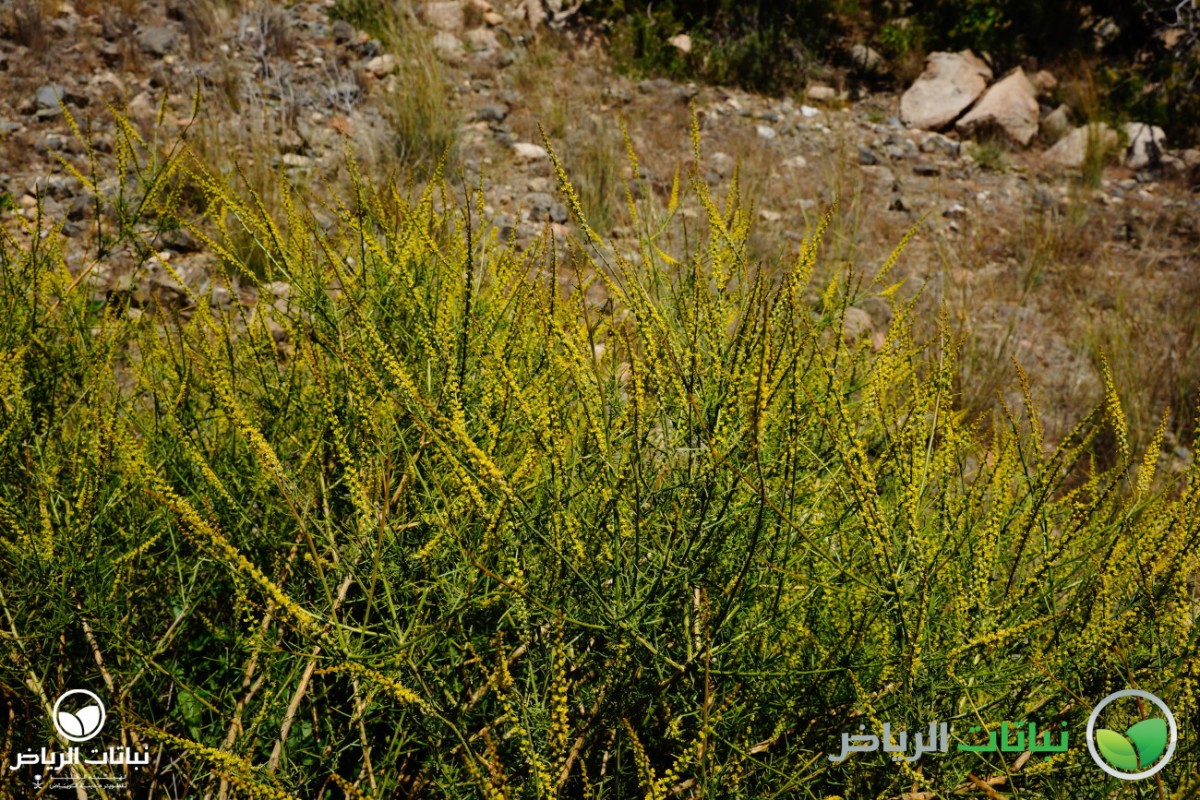
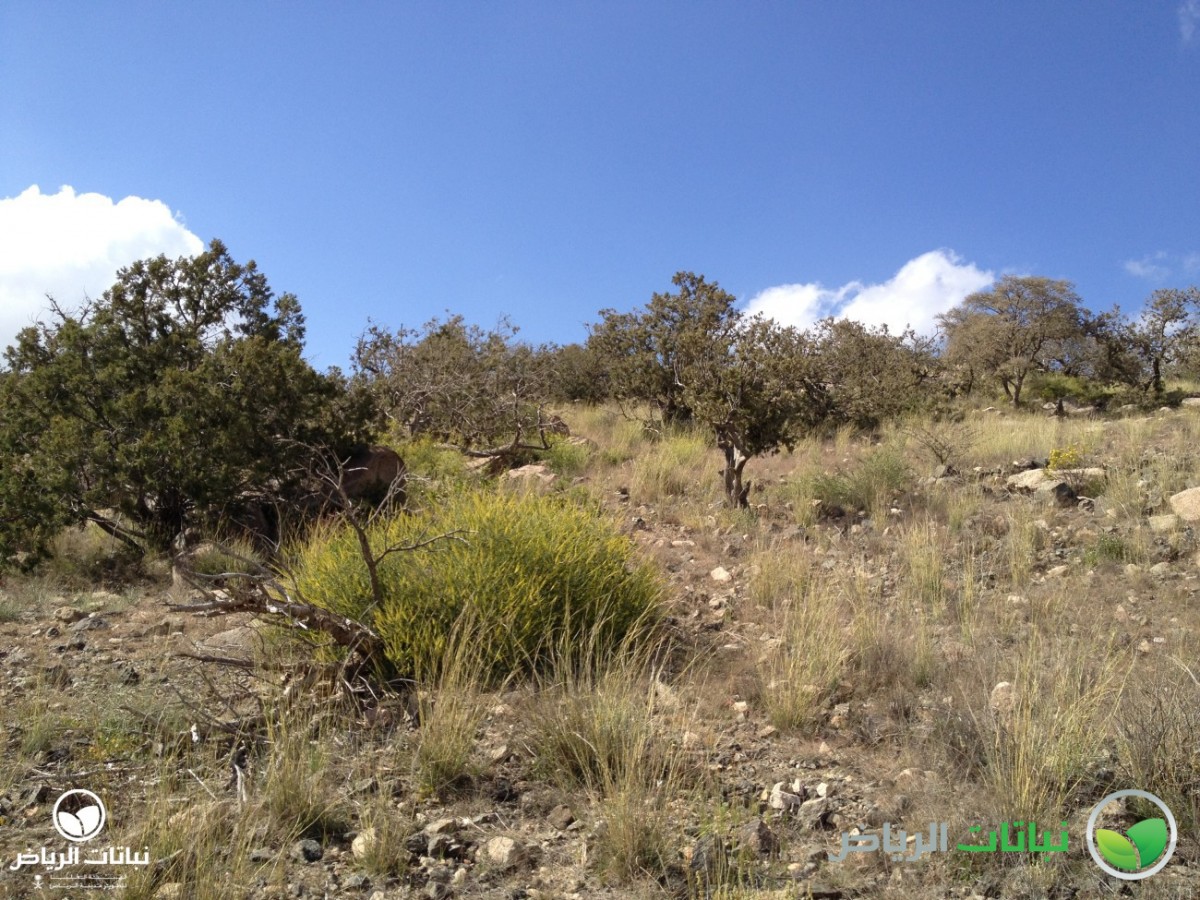
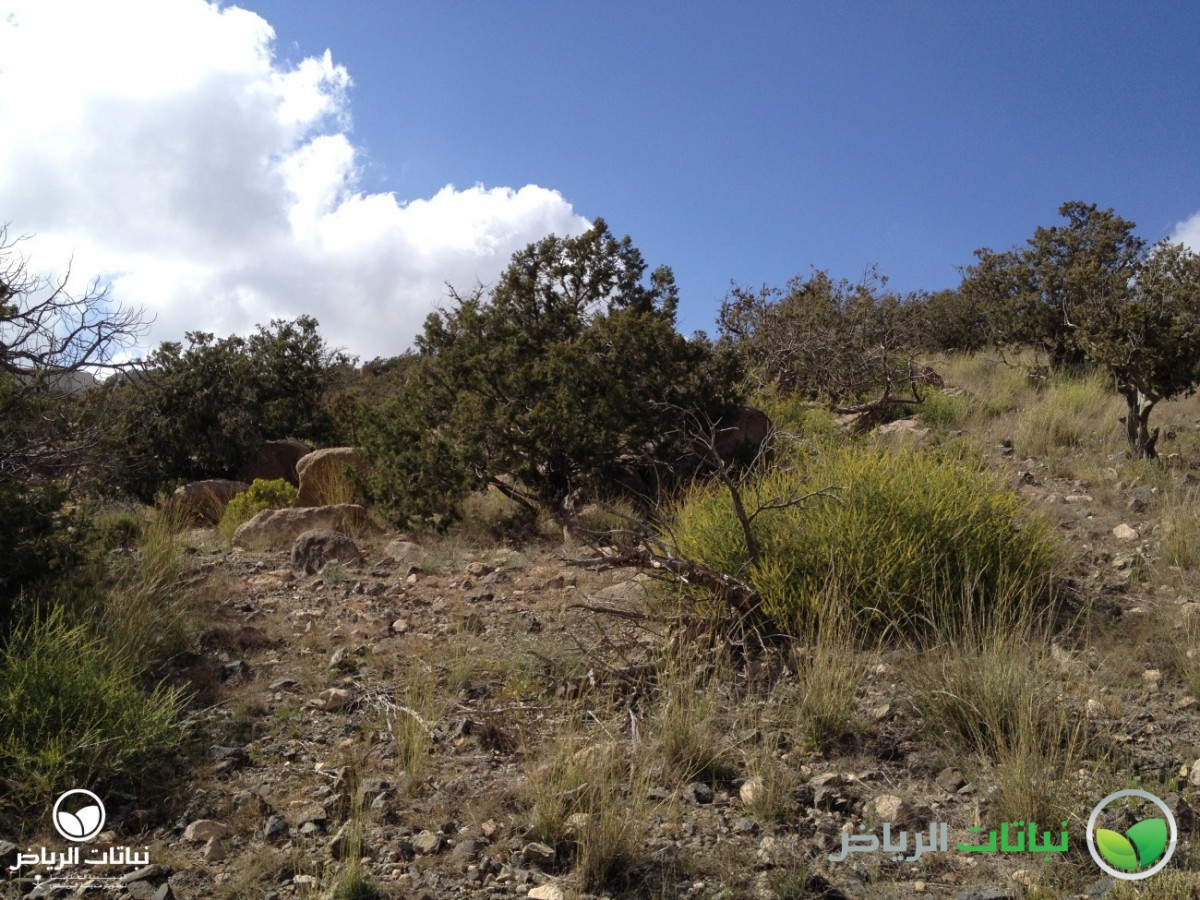
Ochradenus is an indigenous plant from the Arabian peninsula. The Arabic names are kardhi or alandra. The plant can be found growing wild all over Arriyadh and the Arriyadh region. The shrub can grow to a height of 3 metres. The stems are fresh green; the leaves are small and inconspicuous. However, the attractive blooms that appear in spring are in 4 cm long panicles with 4 mm yellow single flowers. The fruits are in 3 mm white berries in panicles. The plant is very well adapted to desert conditions, with its tap root and small foliage. It likes silty, rocky soils. Kardhi can withstand high salinity. Propagation is by direct sowing or sowing and pricking. Maintenance is very low; pruning will optimise growth and flowering. As a native plant, Ochradenus can be used in open country, as a bank and slope stabiliser, coloniser, and for environmental consolidation. Its use is advisable for rehabilitation of plant cover, because of its windbreaking properties. This shrub is also suitable as a hedge and groundcover, and is therefore a good shelter for other plants. The plant can be used as fodder for camels. However, Ochradenus should be considered in urban planting themes as well. In harsh urban conditions, it will provide green foliage where other plants are unable to grow, and it is also a very useful plant in natural schemes such as Wadi Hanifah. In former times, it was used as medicinal plant; a decoction was used for wounds, intestinal parasites and to relieve pain.